
Being Able to Cry
I know there are cancer survivors who get praised for facing their cancer courageously and without complaining. Why do people encourage and want that?
I know for sure, that wasn’t me. If my cancer or my Leukaemia returns, I might cry less and I might not.
Over 6 years, being in and out of the hospital, I will tell you that I got through my cancer with a lot of tears
Are some people braver than others?
Maybe we are just different in how much we reveal or communicate our worries and fears. Or maybe it is a bit of how much different treatments messed up our hormones and emotions in the process? It might even be about what life has already made us deal with up to the point of our cancer diagnosis.
I don’t know, and maybe it doesn’t even matter.
I know I literally cried and worried through my cancer treatment and the hormone-driven and steroid-driven emotional roller coast ride of the surgeries and treatments. Sometimes my face wasn’t a graceful face, and I probably showed my fear. Close friends and family saw my tears and heard about my fears. Maybe I should have not shown them? Maybe….
Everybody has their own burdens in life—health problems, broken relationships, financial struggles and maybe even more than one of these things at the same time. I believe it was OK to feel and show my feelings.
I went through my cancer honestly with the close people in my life. I wrote about cancer truthfully. Still, the courageous graceful patient or the tearful patient full of fear gets through their treatment. Both live with the fear of recurrence and uncertainty for the rest of their lives.
I feel that my openness will help my friends and family be better prepared to face cancer IF it happens to them or someone they love.
Either way you approach cancer, it will take its toll. Cancer and the treatments you go through will take you physically, mentally and emotionally.
Surgery, chemotherapy and radiation have short-term and long-term side effects, but these treatments do work for the most part. I am truly blessed to be here. And I’m so thankful.
You need to know that it is OK to cry when you need to. As much as you need to. Cancer isn’t a fight or a battle or a war. I wasn’t some kind of brave warrior. I am a woman. Getting cancer isn’t a gift. I didn’t receive any remarkable present.
Cancer is a disease. There is no right or wrong way to feel about your cancer. You are allowed to feel the way you want to feel.
Does crying have health benefits?
Many of us often try to hold back our tears in thinking that crying is seen as a sign of weakness, or something to be embarrassed about But is it really? Or is letting tears fall actually healthy?
The conclusion:
Shedding tears can be good for your health
Having a good cry can sometimes be just what the doctor ordered. Some psychologists even suggest that we may be doing ourselves wrong by not tearing up regularly.
“Crying activates the body in a healthy way,” says Stephen Sideroff, Ph.D., a clinical psychologist at UCLA and director of the Raoul Wallenberg Institute of Ethics. “Letting down one’s guard and one’s defences and [crying] is a very positive, healthy thing. The same thing happens when you watch a movie and it touches you and you cry… That process of opening into yourself… it’s like a lock and key.”
The Japanese are such strong believers in the health benefits of crying that they’ve taken that wisdom to the next level.
Some cities in Japan now have “crying clubs” called rui-katsu (meaning, literally, “tear-seeking”), where people come together to lose themselves in good old-fashioned cry.
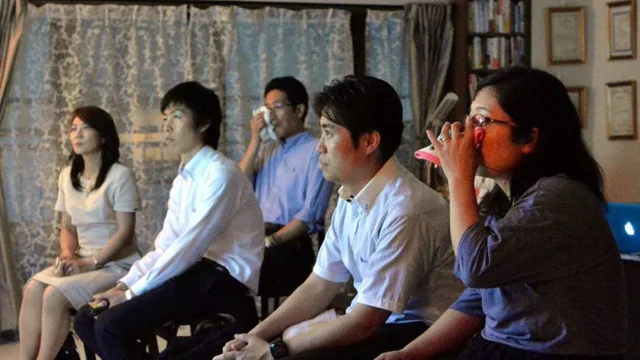
The belief is that crying releases stress and is, therefore, is a great practice when it comes to staying mentally healthy.
Research backs up that opinion. Some studies of the various kinds of tears have found that emotional tears contain higher levels of stress hormones than basal tears (aka lubricating tears) or reflex tears (the ones that form when you get something in your eye) do.
Emotional tears also contain more mood-controlling manganese than the other types. Stress “tightens muscles and heightens tension, so when you cry you release some of that,” Sideroff says. “[Crying] activates the parasympathetic nervous system and restores the body to a state of balance.”
Sideroff also believes that “crying clubs” can provide an encouraging, safe space to cry for people who find it hard to express emotion because of cultural or personal reasons.
“It’s a good idea,” he says. “Crying in a group can validate [the practice] and tell you that it’s something that’s OK to do. For a lot of people, it can make it easier to [cry].”
It’s great if you’re comfortable crying in public and there is a common understanding. Or find a place where you can cry in privacy, such as an empty office or a bathroom stall.
If you can pick out safe spaces to cry in your day-to-day environment, it will become easier for you to express sadness by letting the tears flow.

Be sure to read more of my posts on “I Will THRIVE“




You are a beautiful soul you got this God is with you sending you all the love and good vibes .